Summer in Houston is tough on vehicles. Long commutes, stop-and-go traffic, and triple-digit heat put your cooling system to the test every day. While many drivers don’t think about their coolant until the temperature gauge starts climbing, most cooling system problems begin long before the engine actually overheats.
The good news is that coolant leaks usually provide several warning signs if you know what to look for. Catching the problem early can often prevent a roadside breakdown and help you avoid much more expensive engine repairs.
At Chimney Rock Car Care, we diagnose cooling system problems every week. Here are some of the most common signs that your vehicle may have a coolant leak before it overheats.
Your Coolant Level Keeps Dropping
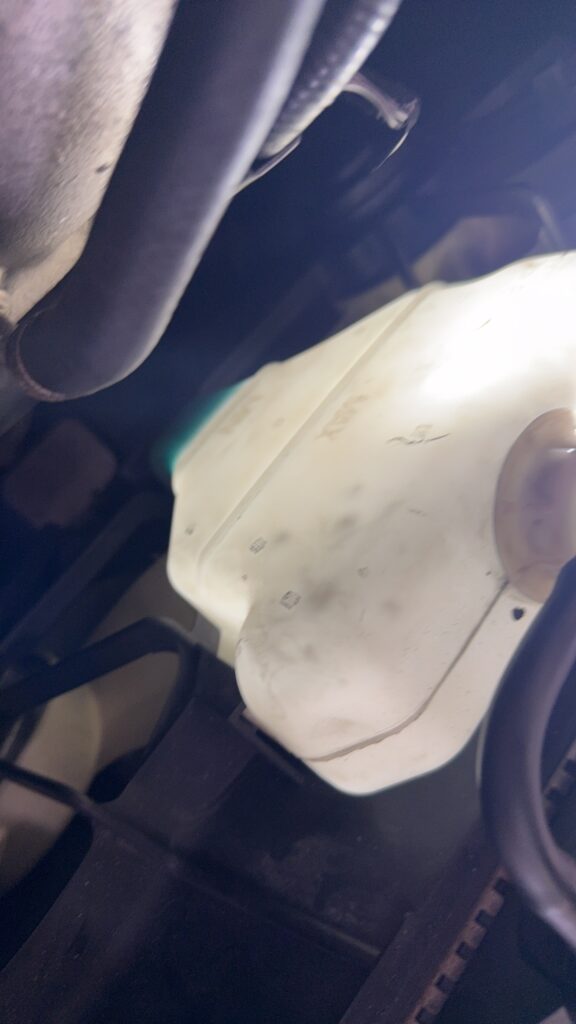
Your cooling system is designed to be sealed. Under normal conditions, the coolant level should remain relatively consistent between routine maintenance services.
If you find yourself adding coolant every few weeks or notice that the coolant reservoir is consistently below the recommended level, there’s usually a reason. A leaking hose, radiator, water pump, thermostat housing, expansion tank, or another cooling system component may be allowing coolant to slowly escape.
Simply adding more coolant may temporarily solve the symptom, but it won’t fix the underlying problem. The leak will almost always continue to get worse over time.
You Notice Coolant Under Your Vehicle
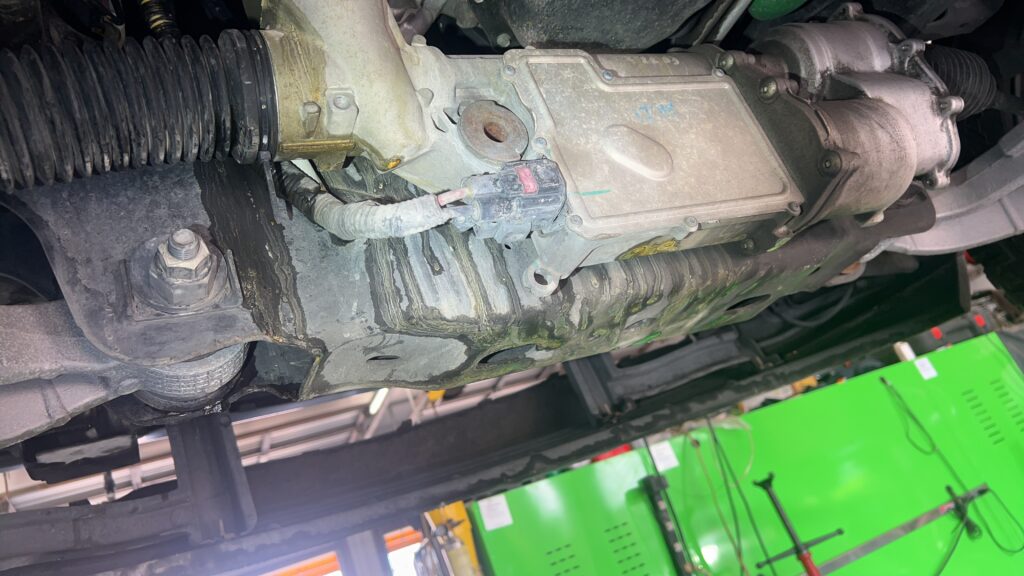
One of the easiest signs to recognize is finding coolant underneath your vehicle after it has been parked.
Depending on your vehicle, coolant may be green, orange, pink, blue, yellow, or purple. It often has a slightly sweet smell and can leave behind a slippery residue.
Even a small puddle shouldn’t be ignored. A minor leak today can quickly become a major leak tomorrow, especially during Houston’s hot summer months when cooling system pressures increase as the engine reaches operating temperature.
If you notice fluid under your vehicle but aren’t sure what it is, having it inspected sooner rather than later can prevent much larger repairs.
White or Colored Residue Around Cooling System Components
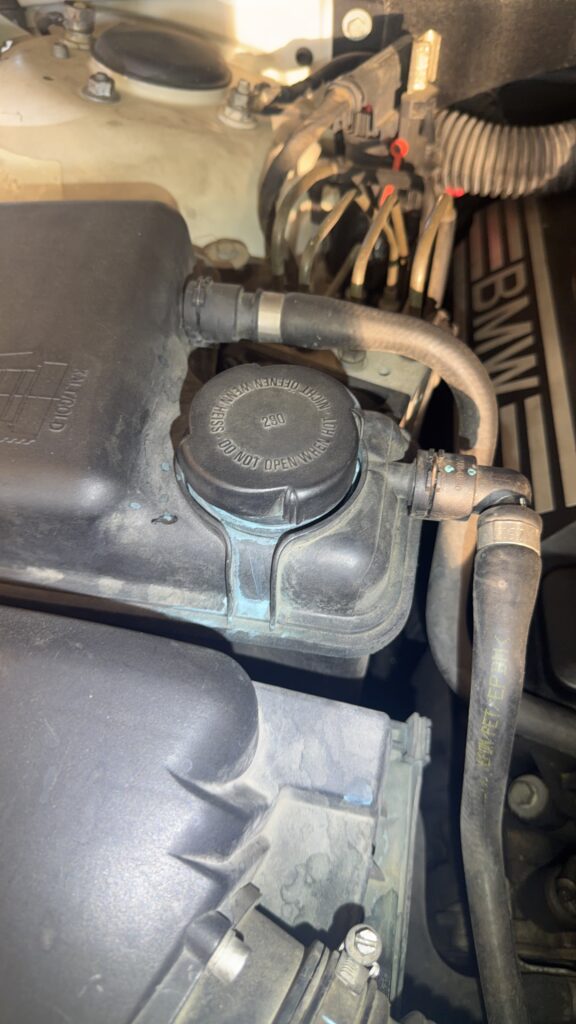
Not every coolant leak reaches the ground.
Many slow leaks evaporate on hot engine components before they ever drip underneath the vehicle. When this happens, the coolant often leaves behind white, green, pink, or orange residue that looks crusty or chalky.
Our technicians frequently find these stains around radiators, hose connections, water pumps, thermostat housings, and coolant reservoirs. These deposits are often one of the first clues that a cooling system has developed a leak.
Even if your coolant level seems acceptable today, those stains usually indicate that coolant has been escaping over time.
Your Temperature Gauge Starts Running Higher Than Normal
Many customers tell us that their temperature gauge only climbs while sitting in traffic or waiting at a stoplight with the air conditioner on.
That’s often an early warning sign that the cooling system isn’t operating as efficiently as it should.
Low coolant levels reduce the system’s ability to carry heat away from the engine. While the gauge may return to normal once you’re moving again, repeated overheating places tremendous stress on the engine.
Ignoring the problem can eventually lead to damaged head gaskets, warped cylinder heads, or other costly engine repairs. The AAA also recommends having an overheating vehicle inspected promptly, as continuing to drive can lead to severe engine damage.
If your vehicle begins running hotter than normal—even occasionally—it’s worth having the cooling system inspected before the situation becomes more serious.
Some Coolant Leaks Can Only Be Found With Pressure Testing
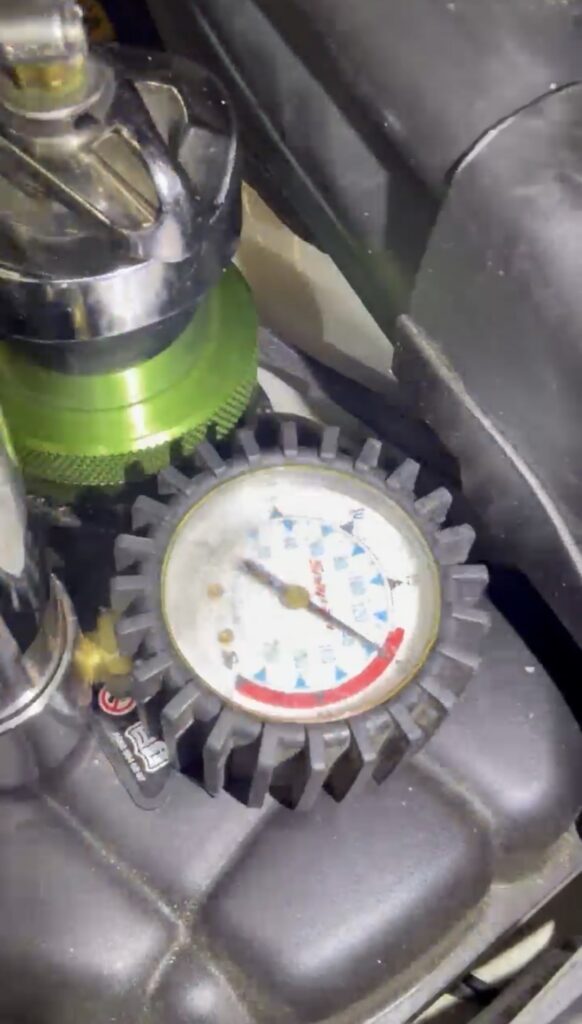
Not every coolant leak is obvious.
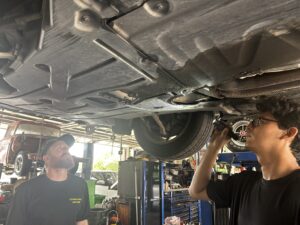
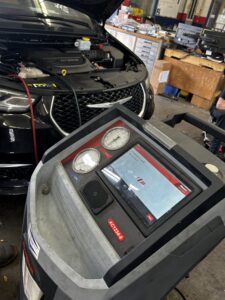
Some only appear when the cooling system is under pressure. That’s why one of the most valuable diagnostic procedures we perform is a cooling system pressure test.
By safely pressurizing the cooling system while the engine is off, we’re often able to locate leaks that would otherwise be difficult to find.
Pressure testing can help identify:
- Cracked coolant reservoirs
- Leaking radiator hoses
- Radiator leaks
- Water pump leaks
- Thermostat housing leaks
- Heater hose leaks
- Small gasket leaks
Rather than replacing parts based on guesswork, pressure testing helps us identify the source of the leak so we can recommend the correct repair.
Real Repair From Our Shop
Recently, one of our technicians diagnosed a vehicle that had a cracked coolant expansion tank.
The customer had noticed they needed to add coolant every so often, but the vehicle had not yet overheated. During our inspection and pressure testing, we found a crack in the expansion tank that allowed coolant to escape as the system built pressure.
By finding the problem before the engine overheated, we were able to recommend the proper repair and help prevent much more serious engine damage.
Situations like this are exactly why we recommend diagnosing coolant loss instead of simply topping off the reservoir.
The Repair Doesn’t End With Replacing the Part
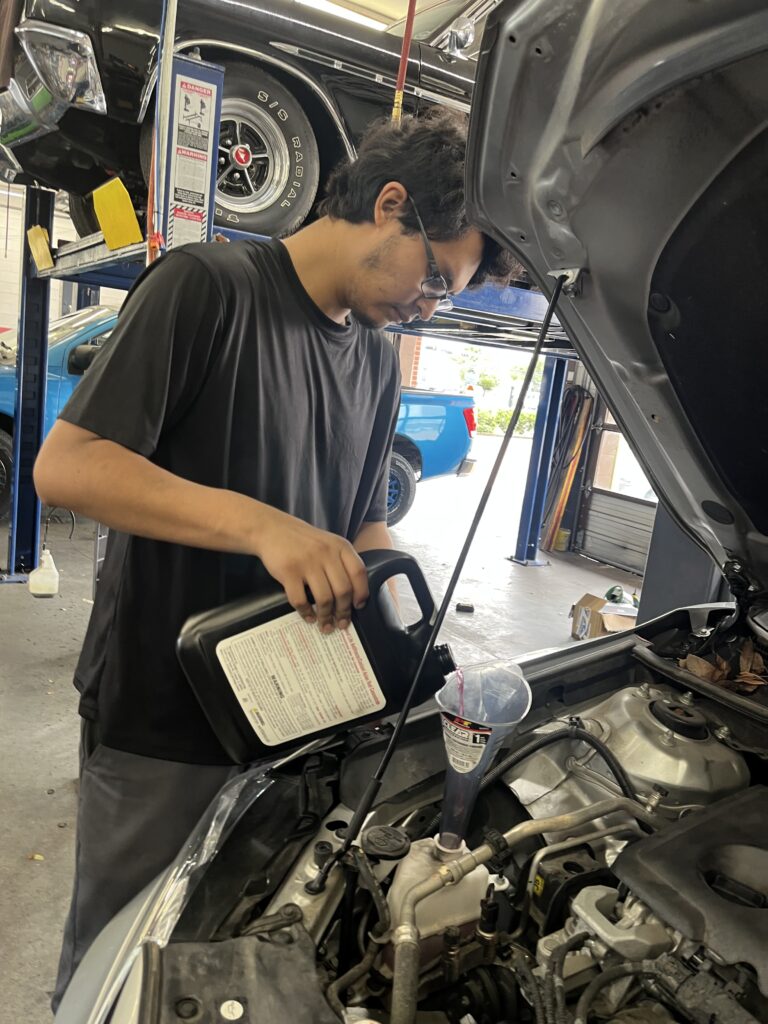
Once a leak has been repaired, the job isn’t complete until the cooling system has been properly refilled, bled of trapped air, and verified to be operating correctly.
Depending on the vehicle, trapped air pockets can lead to poor heater performance, inaccurate temperature readings, or continued overheating if the system isn’t serviced correctly.
After repairs are completed, our technicians verify the coolant level, inspect for additional leaks, and ensure the cooling system is functioning as designed before your vehicle leaves the shop.
Don’t Wait Until Your Vehicle Overheats
Cooling system problems rarely fix themselves. In most cases, a small leak gradually becomes larger until the vehicle eventually overheats.
If you’ve noticed your coolant level dropping, coolant underneath your vehicle, dried coolant residue, or your temperature gauge running hotter than normal, having the cooling system inspected early can often save you from a much larger repair later.
At Chimney Rock Car Care, our ASE-certified technicians use professional diagnostic equipment to locate coolant leaks and recommend the repairs your vehicle actually needs—without guesswork.
If you think your vehicle may have a coolant leak, we’d be happy to help.
We proudly serve drivers throughout Houston, River Oaks, Memorial, Meyerland, Bellaire, West University, Spring Branch, Greater Uptown, the Galleria, and the surrounding communities. Give us a call or schedule your appointment online, and let our team help keep your vehicle running safely through the Houston heat.