Hearing squeaking or grinding? Feeling vibration when you brake? At Chimney Rock Car Care in Houston, our ASE-certified technicians inspect your brakes to find what’s causing the problem and explain what needs attention.
We share inspection photos and videos so you can see what we find. You’ll receive a clear estimate before repairs begin, and qualifying repairs include our nationwide 3-year/36,000-mile limited warranty.
Ready to get your brakes fixed?
Signs Your Brakes Need Attention
Changes in how your brakes sound or feel are worth checking. Common concerns include:
- Squeaking or grinding: Noise when braking can indicate worn pads or other brake problems.
- Vibration or pulsing: Shaking in the steering wheel or brake pedal may point to uneven rotor surfaces or another issue.
- A soft or sinking pedal: A fluid leak or trapped air can change how your brake pedal feels.
- Pulling to one side: Uneven braking or a sticking caliper may cause your vehicle to pull.
- A burning smell: An unusual smell near a wheel can indicate an overheating brake.
- Longer stopping distances: Needing more room to stop deserves prompt attention.
- Brake or ABS warning lights: These lights can signal a concern that needs inspection.
If your vehicle is difficult to stop or the pedal sinks toward the floor, stop driving. Arrange a tow if you notice either concern or a brake fluid leak.
Want to understand what these symptoms mean? Read our guide to brake noise vs. vibration.
Our Brake Services
We inspect your brakes and explain which repairs your vehicle needs. Our brake services include the following:
Brake inspection
Our technicians check your brake pads, rotors, calipers, hoses, lines, and other brake components for wear, damage, and leaks. We look for the cause of your concern and identify anything else that needs attention.
Your digital inspection includes photos and videos of our findings. We explain what needs repair now and what can wait, so you can make an informed decision
Brake pad replacement
A brake service involves more than swapping out pads. We select quality pads suited to your vehicle, with different options for domestic, Asian, and European vehicles. The right parts help provide quiet operation and consistent braking.
Our service includes replacing the brake hardware, cleaning and lubricating the caliper guide pins, and applying anti-squeal treatment where appropriate. We also check caliper operation and address anything that could cause sticking or uneven wear. In most cases, we replace the pads and rotors together as part of the service.
Brake rotor replacement
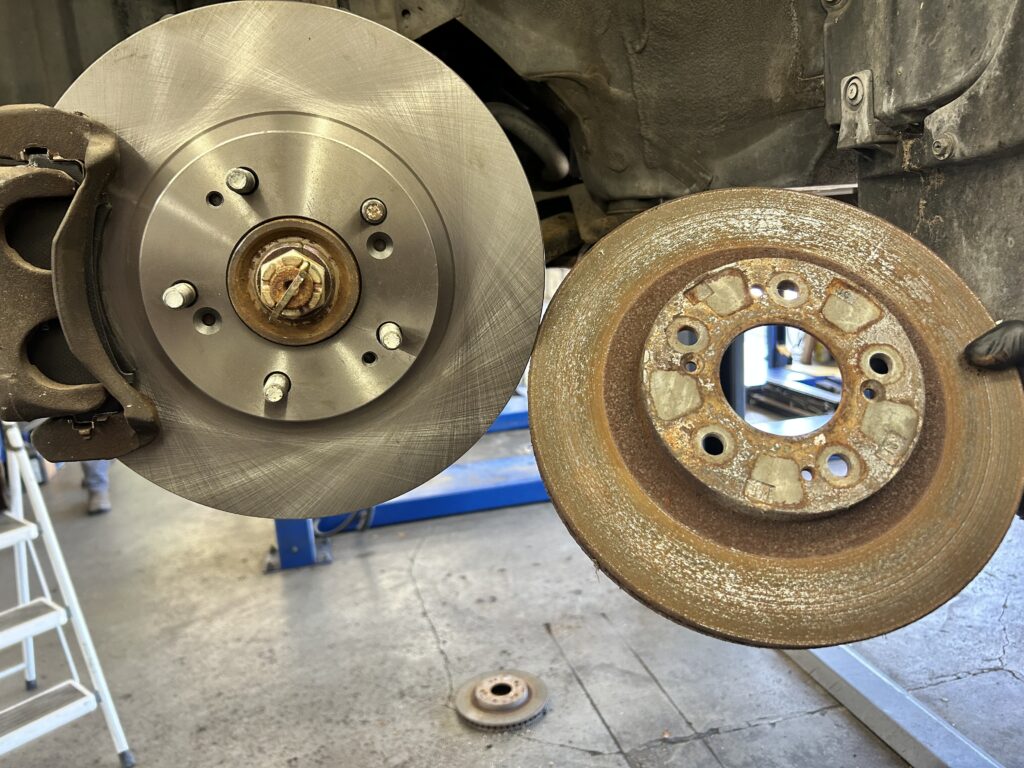
We recommend replacing brake pads and rotors together rather than turning, or resurfacing, the old rotors. Resurfacing removes metal, leaving less material to handle braking heat and future wear. Rotors that become too thin lose heat-handling capacity and strength.
Installing new rotors gives the new pads a fresh, even braking surface. Our goal is to reduce noise, vibration, and uneven wear while helping you get lasting value from your brake service.
Before installation, we clean rust and debris from the hub’s mounting surface. This helps the new rotor sit flush against the hub and reduces the risk of vibration from uneven mounting.
Brake caliper service
Calipers press the brake pads against the rotors to slow your vehicle. A sticking or leaking caliper can cause uneven wear, overheating, or pulling when you brake.
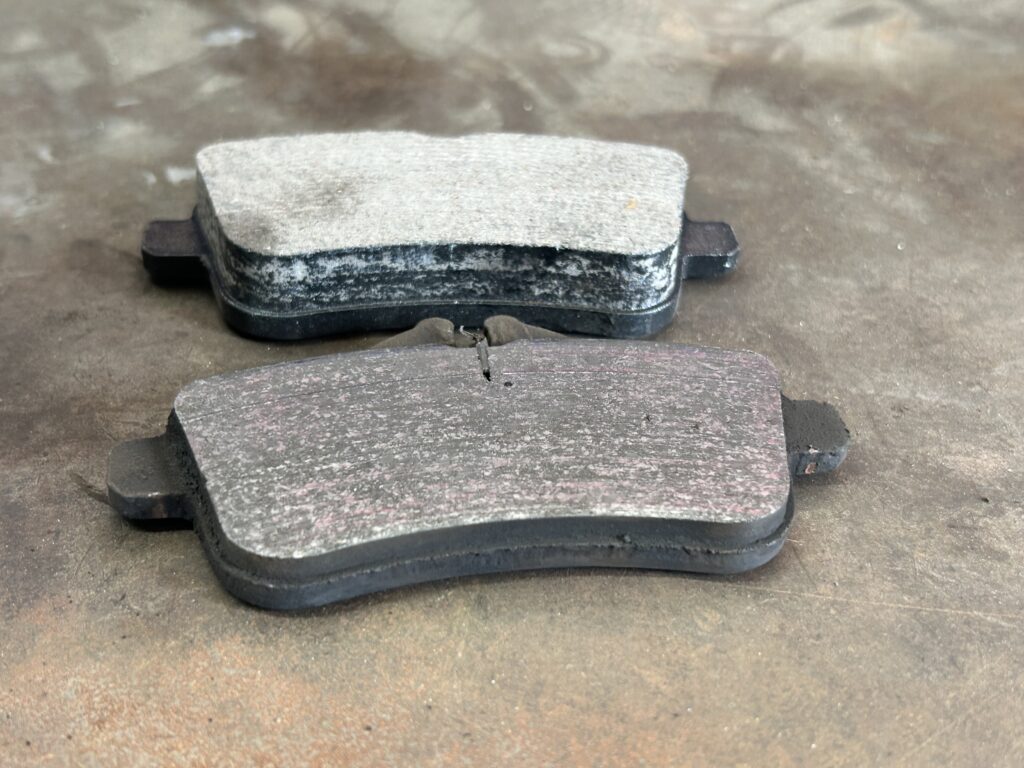
If one pad wears down while the other still looks almost new, the caliper or its sliding components may not be moving properly. Other brake problems can cause similar wear, so we inspect the assembly before recommending repairs.
We check caliper operation, seals, and dust boots for sticking, leaks, or damage. We clean and lubricate serviceable guide pins during brake service. If a caliper needs replacement, we explain why and provide an estimate before proceeding.
Brake fluid flush
Brake fluid transfers pressure from your brake pedal to the brakes at each wheel. Over time, it can absorb moisture, which lowers its boiling point and can contribute to corrosion inside the system.
Our brake fluid service replaces old fluid with fresh fluid that meets your vehicle’s specifications. This helps protect hydraulic components and maintain consistent braking performance.
We offer BG brake fluid service. Eligible vehicles may qualify for the Lifetime BG Protection Plan, subject to its service requirements and coverage terms. Ask our team whether your vehicle qualifies.
Ready to schedule a brake inspection? Call us at 713-840-8781 to schedule service.
Why choose Chimney Rock Car Care?
- ASE-certified technicians: Experienced technicians who inspect your brakes and explain the repairs your vehicle needs.
- Photos and clear recommendations: Your digital inspection shows what we find and helps you understand what needs attention now and what can wait.
- Quality parts and careful installation: Parts selected for your vehicle, with attention to cleaning, lubrication, and hardware.
- Estimates before repairs: We explain the recommended work and get your approval before proceeding.
- Loaner Cars: While your vehicle is being fixed, customers can use a loaner car to run errands or for an extended time if your truck or car’s repairs last longer than a business day.
- Help getting where you need to go: Complimentary shuttle service within five miles and loaner vehicles available by reservation. Loaner fees apply.
- Nationwide warranty: Qualifying repairs include the TechNet 3-year/36,000-mile limited warranty, whichever comes first
Schedule brake repair services in Houston, TX
Have a brake concern? Our team will inspect your vehicle, explain what we find, and provide an estimate for recommended repairs.
Visit Chimney Rock Car Care at 2839 Chimney Rock Road in Houston, between Westheimer and Richmond.
Call 713-840-8781 or schedule your appointment online.
Brake Repair FAQs
Your brakes may give you warning signs before they need to be replaced. You might hear squealing or grinding, feel shaking when you brake, notice that your vehicle takes longer to stop, or feel a change in the brake pedal. Sometimes, though, brake pads wear down without making any noticeable noise.
The most reliable way to know is to have your brakes inspected. At Chimney Rock Car Care, we check the condition and thickness of the brake pads, inspect the rotors, and look for other issues that could affect braking. We’ll explain what needs attention now and what can be monitored, so you can make an informed decision about your vehicle.
Brakes can squeak for several reasons, and the noise doesn’t always mean something is wrong. Moisture, surface rust, dust, or the materials used in certain brake pads can cause squealing. Worn brake pads can also make noise when their built-in wear indicators contact the rotors.
Sometimes, we inspect a customer’s brakes and find that the pads, rotors, and other components are in good condition. The squealing may simply be caused by the material the brake pads are made from and does not pose a safety risk. In those cases, the brakes do not need to be replaced for safety, but replacing them may be necessary if the customer wants to eliminate the noise.
When the noise happens matters. A brief squeal during your first few stops may have a different cause than a squeal that continues throughout your drive. Grinding, shaking, or a change in how your brakes feel should be checked promptly.
At Chimney Rock Car Care, we inspect your brakes, explain what’s causing the noise, and let you know whether a repair is needed or whether the noise is simply something you can choose to live with.
If your brakes squeal during the first few stops of the day but quiet down as you drive, moisture or a thin layer of surface rust on the brake rotors may be the cause. This is especially common after your vehicle sits overnight, during humid Houston weather, or after rain. The noise often disappears once the brake pads clear the rotor surface.
Not every morning squeal is harmless, though. Worn brake pads, glazed brake surfaces, or other brake issues can also cause noise. If the squealing continues after a few stops, gets louder, or comes with grinding, shaking, or a change in how the brakes feel, have them inspected.
At Chimney Rock Car Care, we can inspect your brakes and help determine whether the noise is normal surface buildup or a sign that something needs attention.
If your car shakes when you apply the brakes, where you feel the vibration can help narrow down the cause. Shaking in the steering wheel often points toward the front brakes, while a vibration through the seat or body of the vehicle often points toward the rear brakes.
A common cause is uneven brake rotor thickness. This can happen even if you recently had your brakes serviced. When only the brake pads are replaced and the existing rotors are reused, there is a greater chance of developing or continuing to experience a vibration when braking.
At Chimney Rock Car Care, we recommend replacing brake pads and rotors together to help prevent this issue. We inspect your brakes and related components to determine what’s causing the shaking and explain our findings before recommending a repair.
Brake pads often last around 30,000 to 70,000 miles, but there’s no set mileage that applies to every vehicle. Driving habits, vehicle weight, brake pad materials, and how much time you spend in stop-and-go traffic all affect brake wear.
Hybrid and electric vehicles can go much longer between brake replacements because regenerative braking uses the electric motor to help slow the vehicle, reducing wear on the traditional brakes. We’ve also seen some newer Jeeps reach 100,000 miles before needing brakes, while other vehicles have needed brake work before their factory warranty expired. That’s why we don’t recommend replacing brakes based on mileage alone.
At Chimney Rock Car Care, we inspect brake pad thickness and rotor condition to determine whether your brakes need attention now or can be monitored. When replacement is needed, we recommend replacing the pads and rotors together.
At Chimney Rock Car Care, we recommend replacing brake pads and rotors together. Even if the existing rotors look okay, they may have uneven wear or surface variations that can cause noise or vibration when new pads are installed.
Years ago, resurfacing rotors was a common alternative. Many modern rotors have less material available for machining, and removing more material can reduce their ability to handle heat. That matters in Houston, where frequent braking in stop-and-go traffic puts repeated heat into the rotors. Reusing old rotors with new pads can increase the chance of a brake shimmy. Over time, the old brake pads wear to match the surfaces of the existing rotors. When new pads are installed against those worn surfaces, a vibration may become noticeable—even if the brakes felt smooth before the pad replacement.
At Chimney Rock Car Care, we explain the condition of your brakes and why we recommend replacing the pads and rotors as a complete service. Our goal is to help you avoid having to return for noise or vibration after a brake repair.
A soft or spongy brake pedal may travel farther than usual or feel less firm when you press it. You might also notice that you have to press harder to stop your vehicle. These changes can have different causes, including air in the brake lines, low brake fluid, a hydraulic system problem, or worn brake components.
If your brake pads are worn down, you may notice a change in how the brakes feel or find yourself pressing harder to stop. That doesn’t necessarily mean the pedal itself is spongy, which is why it’s important to describe exactly what you’re experiencing.
At Chimney Rock Car Care, we inspect the brake pads, rotors, fluid, and related components to determine why your brakes feel different before recommending a repair. If your pedal suddenly becomes soft, sinks toward the floor, or your vehicle isn’t stopping normally, stop driving and arrange to have it inspected promptly.
It depends on how worn your brakes are and whether you’re experiencing any changes in how your vehicle stops. Brake pads wear gradually, so there is often time to plan for replacement before they become a more urgent concern.
We begin recommending brake replacement when the pads measure around 4–5 mm. We mark them yellow on your vehicle inspection so you can start planning and budgeting for the service. When the pads reach 3 mm, we mark them red and recommend replacing them promptly. Continuing to drive as the pads wear thinner increases the risk of metal-on-metal contact, rotor damage, and potentially damage to the brake calipers.
If you hear grinding, notice a significant change in braking, or feel that your vehicle isn’t stopping normally, don’t wait for your next oil change to have the brakes checked.
At Chimney Rock Car Care, we measure your brake pads, inspect the rest of the braking system, and explain whether replacement is something to plan for or something that needs attention now.
A brake warning light can come on for several reasons. The parking brake may still be engaged, the brake fluid may be low, or your vehicle may have detected a problem with the braking system. Some vehicles, including certain BMW models, also use a red BRAKE warning to let you know the brake pads are due for replacement.
The meaning of the light depends on your vehicle and which warning is displayed. An ABS warning generally indicates a problem with the anti-lock braking system. A red BRAKE warning might be related to brake pad wear, but it can also indicate a more urgent issue. The color alone doesn’t tell us which one it is.
If the warning stays on after you release the parking brake, have it checked promptly. If your brake pedal feels soft, sinks toward the floor, or your vehicle isn’t stopping normally, pull over somewhere safe and have the vehicle towed to a repair shop rather than driving it in.
At Chimney Rock Car Care, we identify what triggered the warning, inspect the brakes and fluid level, and perform additional testing as needed. We’ll explain whether your vehicle is due for brake replacement or has another issue that needs attention.