Have you ever wanted to ask your mechanic a question but wondered if it was too simple, too complicated, or just plain weird?
Ask us.
At Chimney Rock Car Care, we spend a lot of time answering questions about cars. Warning lights, maintenance schedules, strange noises, repair costs and A/C problems are some of the most common. And chances are, if you have a question about your car, someone else has wondered the same thing.
We recently added a new FAQ page to our website to answer some of the questions we hear most often. But we also want to hear what you want to know.
Here are a few of the questions we hear around the shop.
Does the check engine light tell you exactly what is wrong with my car?
Not usually.
A trouble code tells a technician what the vehicle’s computer has detected, but it doesn’t necessarily identify the failed part.
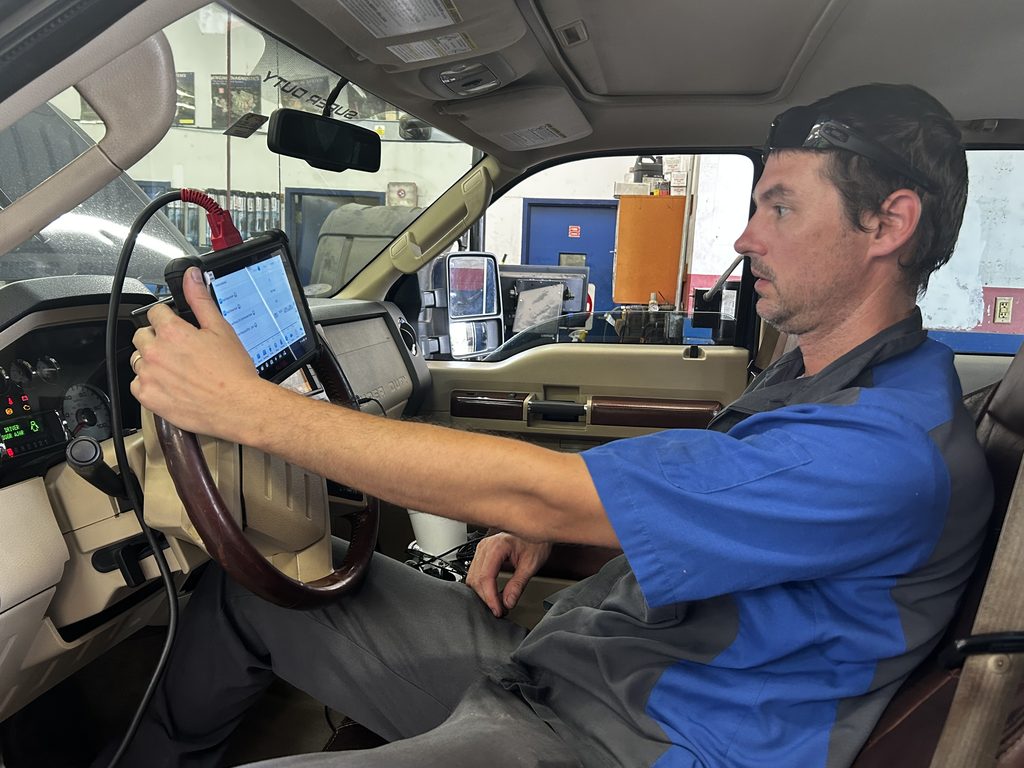
For example, a code may indicate that the engine is running too lean. That could be caused by an air leak, fuel delivery problem, sensor issue, wiring problem, or several other possibilities.
That’s why reading the code is generally the beginning of the diagnostic process—not the end.
Do I have to take my car to the dealership for maintenance?
No. You are generally free to have routine maintenance performed by an independent repair shop without voiding your manufacturer’s warranty. A manufacturer cannot simply void your vehicle’s warranty because you chose an independent repair shop for maintenance.
The important part is making sure your vehicle is properly maintained. That includes using the correct fluids, parts, procedures and specifications. It’s also a good idea to keep records of the maintenance that has been performed.
At Chimney Rock Car Care, we service everything from Toyota, Honda and Lexus to BMW, Mercedes-Benz, Audi, Land Rover, MINI and Porsche. We make sure the products we use meet the appropriate specifications for your vehicle.
Having your maintenance performed by an independent shop does not, by itself, void your manufacturer’s warranty.
How often should I really change my oil?
There’s no single mileage interval that’s right for every vehicle.
While some manufacturers recommend oil change intervals as long as 10,000 miles, that doesn’t mean 10,000 miles is the right interval for every driver or every vehicle.
Houston driving is especially hard on engine oil. Short trips, stop-and-go traffic, long periods of idling and extreme heat can all fall under more severe operating conditions. On frequent short trips, the engine may not stay at full operating temperature long enough to evaporate moisture and other contaminants from the oil.
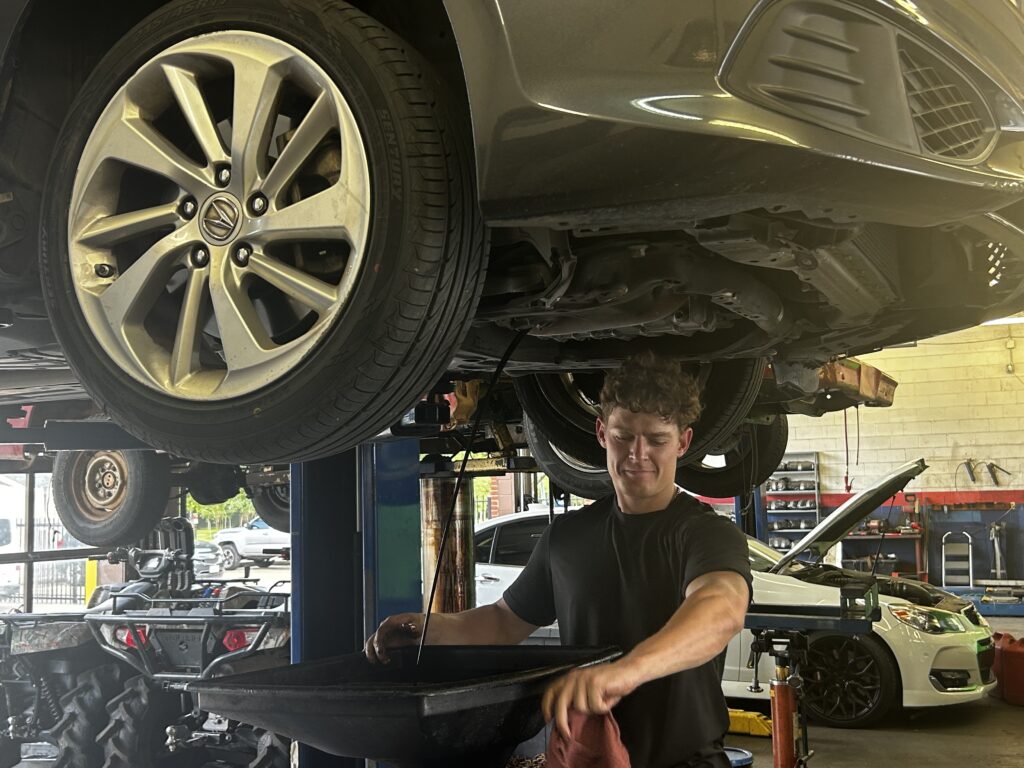
There’s another important part of extended oil change intervals that often gets overlooked: you still have to check your oil level regularly. Going 10,000 miles between oil changes doesn’t mean going 10,000 miles without opening the hood. Many engines consume some oil between services. This is one reason we believe in a 5,000-mile oil change interval. When we see normal oil consumption over 5,000 miles, the amount is often relatively small. As the interval gets longer, however, there is more opportunity for the oil level to become significantly low. On an engine that consumes oil, going thousands of additional miles without checking the level can potentially lead to engine damage.
That’s why we’re generally cautious about very long oil change intervals in Houston. At Chimney Rock Car Care, we will never put more than 5,000 miles on your oil change sticker because of the extreme conditions our vehicles operate in. That doesn’t mean we’re going to scold you if you choose to follow a longer manufacturer-recommended interval. Different vehicles and drivers have different needs. We simply believe 5,000 miles is a good maximum interval to recommend based on Houston’s heat, traffic, idling and short-trip driving.
If you do choose to go longer between oil changes, checking the oil level regularly becomes even more important. The right interval ultimately depends on the manufacturer’s recommendations, the engine, mileage, oil specification, driving habits and actual operating conditions. Our goal is to give you the information you need to make that decision while helping protect your engine for the long term.
Can I keep driving with my check engine light on?
It depends on why it’s on.
A steady check engine light doesn’t always mean you need to immediately shut the vehicle off. But it shouldn’t be ignored. A flashing check engine light is more urgent and can indicate an active misfire that may damage the catalytic converter.
If the vehicle is overheating, losing oil pressure, running poorly or displaying other serious warnings, continuing to drive could cause additional damage. In some cases, that damage can be severe enough that the engine or another major component is no longer repairable.
When in doubt, call us and tell us exactly what you’re seeing and what the vehicle is doing.
Why does my European car sometimes cost more to service?
Vehicles such as BMW, Mercedes-Benz, Audi, Land Rover and Porsche can have specific service requirements. That may include specialized fluids, parts, labor procedures and vehicle-specific diagnostic equipment.
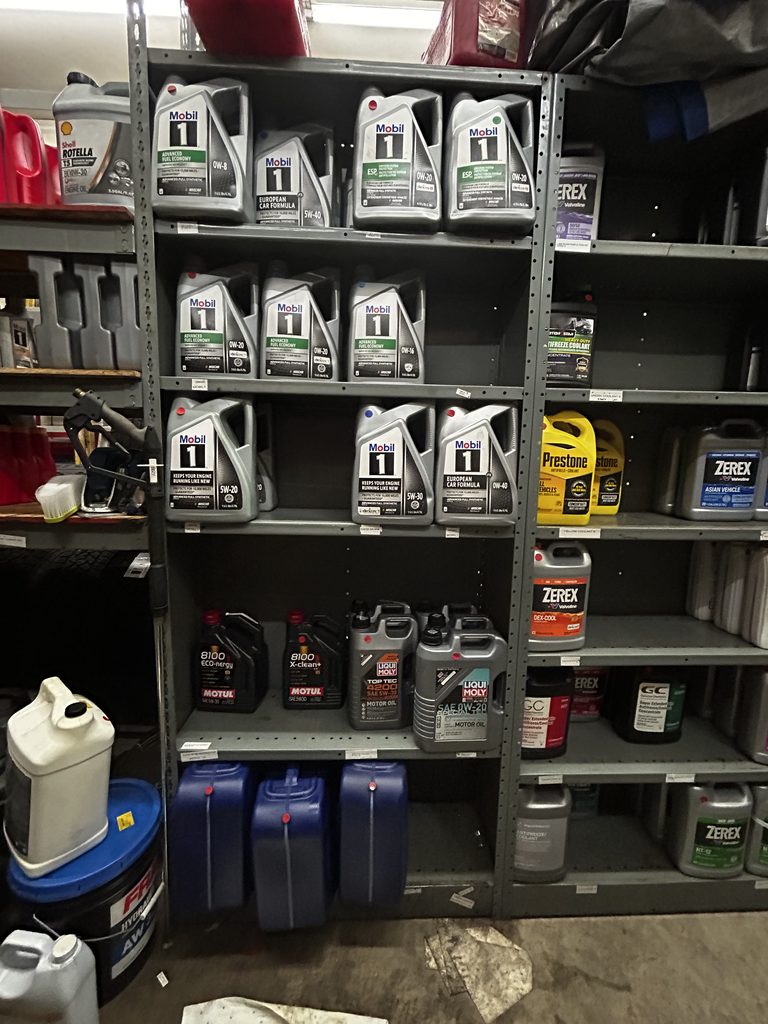
Even something as seemingly simple as an oil change may require a particular oil specification rather than just a particular viscosity. Some European vehicles may also require access to manufacturer-specific software or paid subscriptions to properly reset the oil service or maintenance reminder after an oil change.
Using the right products and procedures matters, especially as these vehicles age.
Do I really need all of the maintenance my car recommends?
Yes, mileage-based maintenance is important and is one of the best ways to prevent costly repairs and keep your vehicle reliable. We use your vehicle’s mileage, service history, and manufacturer recommendations to determine what maintenance is due.
We also look at the actual condition of the vehicle. If a fluid, filter, or other maintenance item appears to have been recently replaced, we’ll let you know rather than performing and charging you for a service you may not need yet.
Maintenance is meant to prevent problems before they become expensive repairs. Our job is to help you understand what’s due, what condition the vehicle is in, what should be handled now, and what can reasonably wait.
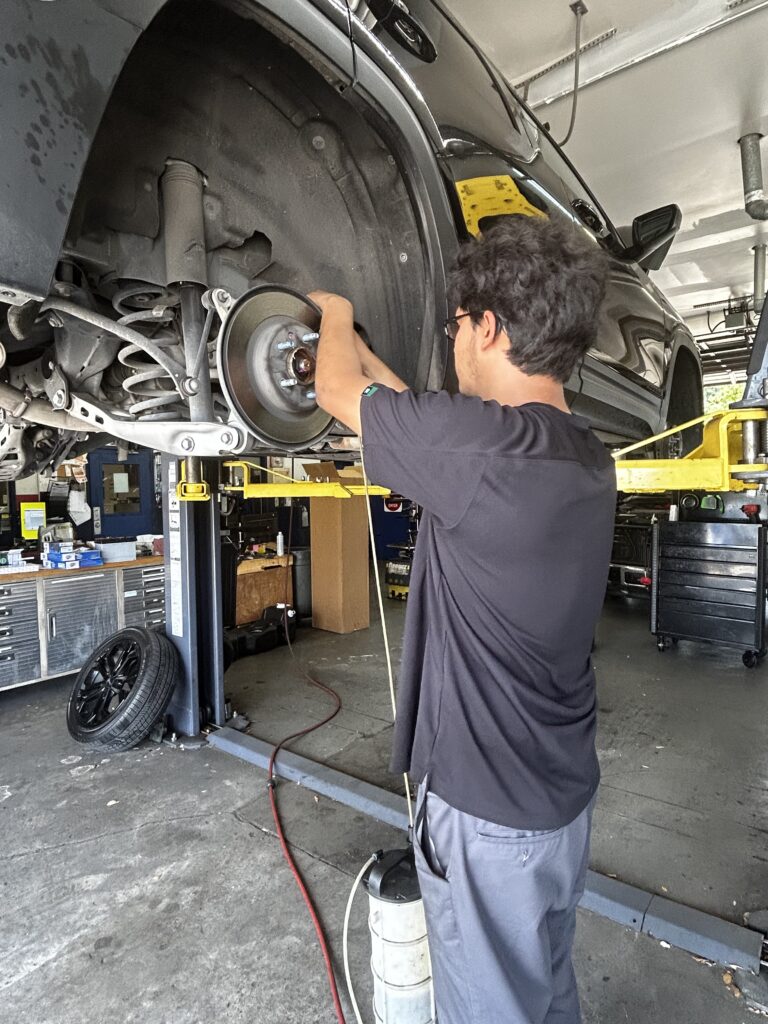
One phrase we use around the shop is: fluids are cheaper than metal. Routine maintenance on systems like your cooling system and transmission may feel like an expense when everything is working properly. But replacing worn-out fluid is far less expensive than replacing a water pump, radiator or transmission—or, in the worst case, an entire engine. Staying ahead of fluid services can help protect those major components and save you money in the long run.
What’s the difference between an A/C check and an A/C diagnostic?
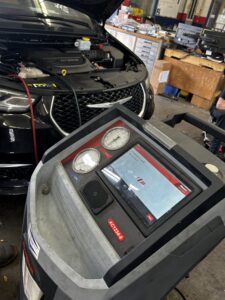
An A/C check is a good starting point when you want to know how the system is performing. We check the vent temperature, visually inspect the A/C system and look for obvious signs of leaks or damage. We also check system pressures to see how the system is operating.
An A/C diagnostic goes further when the system isn’t operating correctly or the initial check points to a problem. Diagnostic testing is used to determine why the A/C isn’t working properly. Depending on what we find, that may include leak testing, electrical testing, checking sensors and control systems, or testing compressor operation.
For example, if an A/C check shows that system pressures aren’t where they should be, the next step may be to evacuate and recharge the system to the proper refrigerant level. This gives us a known starting point. If the A/C still isn’t performing correctly after the refrigerant charge is verified, additional diagnostic testing may be needed to determine why.
A/C problems can be caused by refrigerant leaks, electrical faults, compressor problems, sensor issues, airflow problems, and other failures. Especially during a Houston summer, “it’s not blowing cold” can have quite a few different causes.
Have a Question for Us?
These are only a few of the questions we hear every week.
We’ve answered more common questions on our FAQ page, but we’d also love to know what you want us to explain.
Is there something about your vehicle you’ve never quite understood? Wondering whether a service is really necessary? Confused by something another repair shop or dealership told you?
Send us your question or leave it in the comments when you see this post on Facebook.
We may answer it directly—or turn it into a future blog so other Houston drivers can learn from it too.
Chimney Rock Car Care serves drivers throughout Houston, including the Galleria, Greater Uptown, Bellaire, West University, River Oaks, Memorial and Meyerland.
Chimney Rock Car Care
2839 Chimney Rock Rd
Houston, TX 77056
713-840-8781