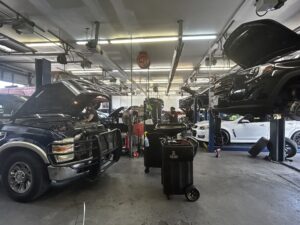
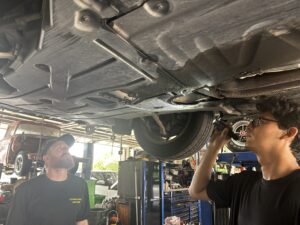
Houston’s first cool front arrived this week, and we had a vehicle in the shop for a coolant flush. The timing was a good reminder that coolant matters long after summer ends.
Most Houston drivers associate coolant with keeping their engine from overheating in traffic. But it also helps warm the cabin, protects against freezing, and helps prevent corrosion inside the cooling system.
As you reach for the heater for the first time in months, here’s what to know about the fluid working behind the scenes.
Your Car’s Heater Depends on Engine Coolant
In most gas-powered vehicles, hot engine coolant flows through a small radiator behind the dashboard called the heater core. The blower moves air across it to provide warm air through your vents.
When the coolant level is low, air is trapped in the system, or the heater core is restricted, you may notice weak heat or heat that comes and goes.
Other problems, including a thermostat or an air-temperature control door malfunction, can cause similar symptoms. Finding the cause helps us determine the right repair.
If your heater is blowing cold air and you’ve also noticed a low-coolant warning or needed to add coolant, let us know. Those details help us narrow down the concern.
Coolant Also Protects Against Freezing
Antifreeze is part of your engine coolant mixture. Many vehicles use a 50/50 mixture of antifreeze and water, although the correct concentration and coolant specification depend on the vehicle.
Repeatedly adding plain water can dilute that mixture and reduce its freeze protection. In freezing conditions, an inadequately protected mixture can freeze and expand, potentially damaging the radiator, engine block, or other cooling-system components.
Houston may have mild stretches during winter, but freezing weather is still something to prepare for. That matters even more if you’re driving somewhere colder for the holidays.
Testing coolant helps determine its current freeze protection, especially when you’re unsure what has been added over the years.
Why We Stock So Many Different Coolants
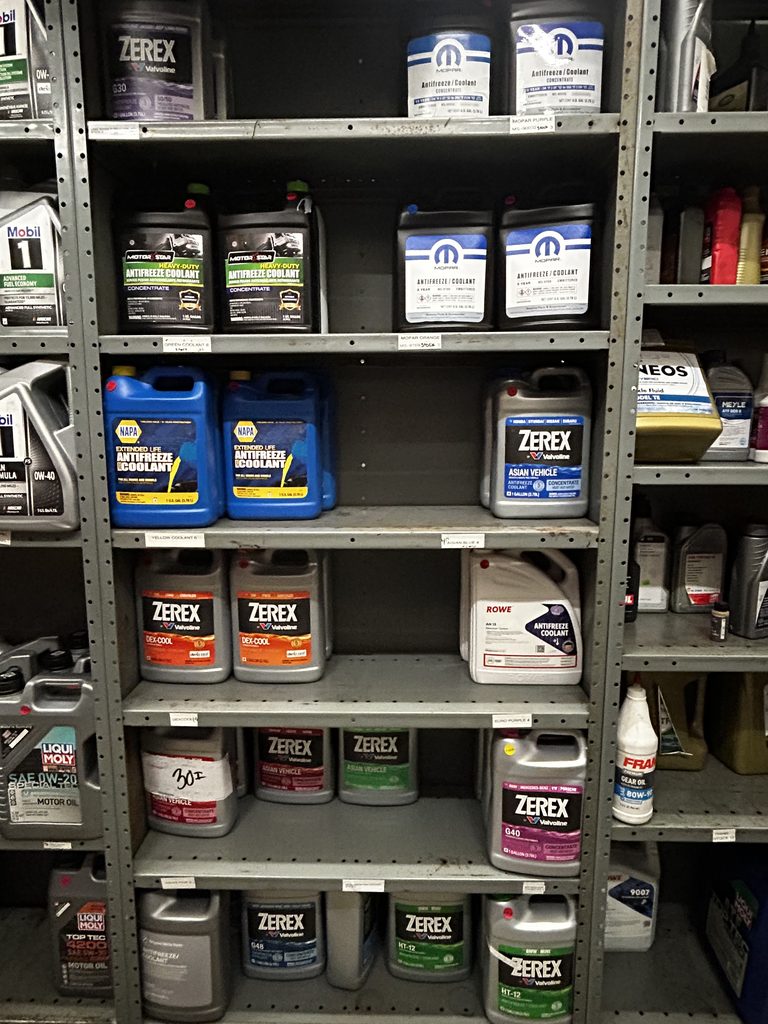
Take a look at our coolant shelf, and you’ll see several different products. That variety serves a purpose.
Different vehicles require different coolant specifications. The correct product helps protect the metals, seals, and other materials used throughout that vehicle’s cooling system.
Color alone doesn’t tell you whether a coolant is correct for your car. Two products with similar colors may have different specifications.
At Chimney Rock Car Care, we select coolant based on your vehicle’s requirements. Whether you drive a domestic truck, an Asian import, or a European vehicle, choosing the appropriate fluid is part of performing the service correctly.
A Good Freeze-Protection Reading Is Only Part of the Picture
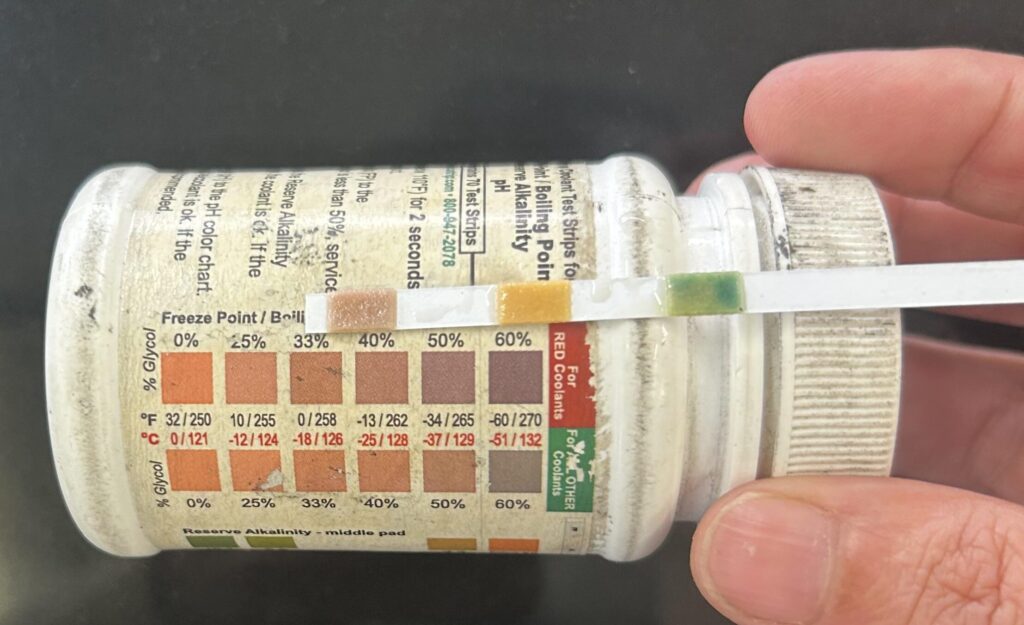
Coolant also contains additives that help protect the cooling system against corrosion. Those additives have a service life, which is one reason coolant needs periodic replacement.
A freeze-protection test helps us evaluate the mixture’s protection against cold temperatures. We also consider your vehicle’s maintenance schedule, service history, coolant condition, and any symptoms you’ve noticed when recommending service.
Coolant can still have adequate freeze protection and be due for replacement based on its age or mileage.
If you can’t remember the last coolant service, we can help review what your vehicle needs.
BG Cooling System Service at Chimney Rock Car Care
When your vehicle is due for coolant service, we offer a BG Cooling System Service to help remove accumulated deposits and replenish cooling-system protection.
The service uses BG cleaning products and coolant exchange equipment to remove old coolant and help clean rust, mineral deposits, and other residue. We refill the system with coolant that meets your vehicle’s requirements.
Qualifying services may also include coverage through the Lifetime BG Protection Plan, subject to the plan’s eligibility requirements and continued maintenance. Ask our team whether your vehicle qualifies.
Learn more about the BG Cooling System Service.
Check the Level and Watch for Leaks
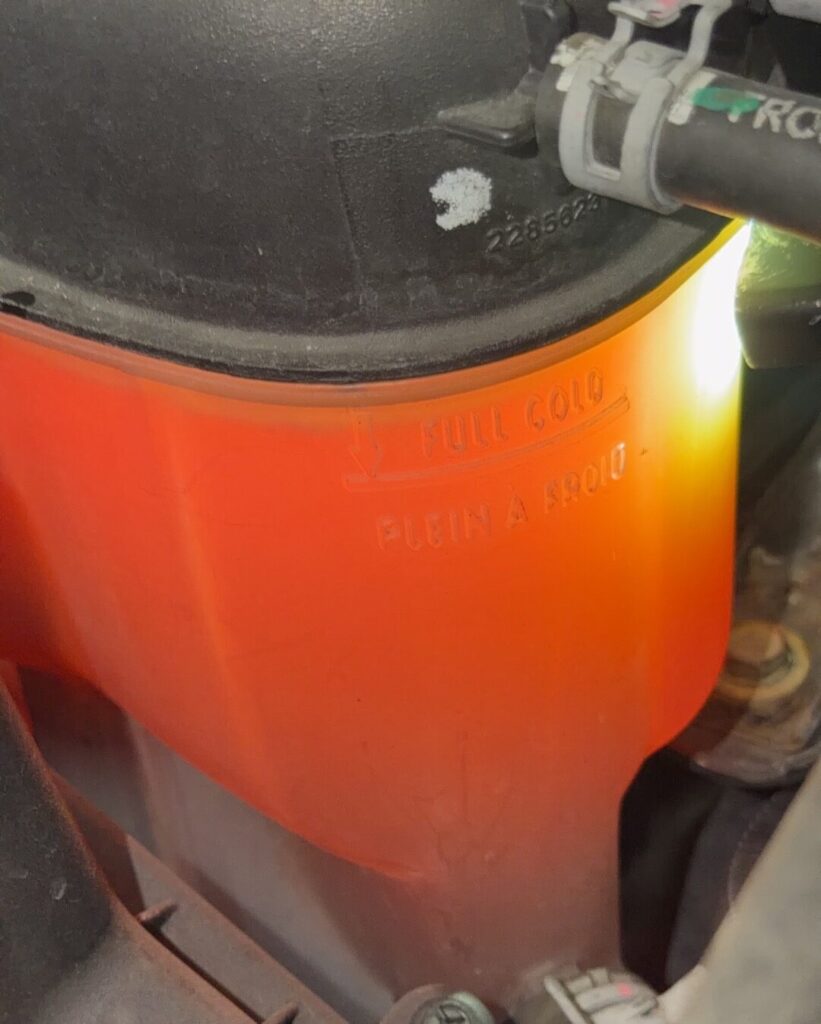
With the engine completely cold, you can visually check the coolant reservoir against the markings specified for your vehicle. Depending on the design, these may say MIN/MAX or FULL COLD.
Never remove a radiator cap or pressurized coolant reservoir cap while the engine is hot.
If the level repeatedly drops, have the system inspected. Adding coolant replaces the missing fluid, but the cause of that loss still needs attention.
Watch for puddles beneath the vehicle, a sweet smell, or a low-coolant warning. You can learn more in our article on how to spot a coolant leak before your engine overheats.
Schedule Coolant Service in Houston
Whether you’re commuting through the Galleria, taking the kids to school in Bellaire, Meyerland or West University, or heading out of town for Thanksgiving, this is a good time to review your cooling-system maintenance.
At Chimney Rock Car Care, we can check your coolant, review your service history, and inspect concerns such as fluid loss or weak cabin heat. If a coolant flush is due, we’ll explain the recommendation and use coolant that meets your vehicle’s requirements.
Contact us to schedule your visit or learn more about our cooling system services in Houston.