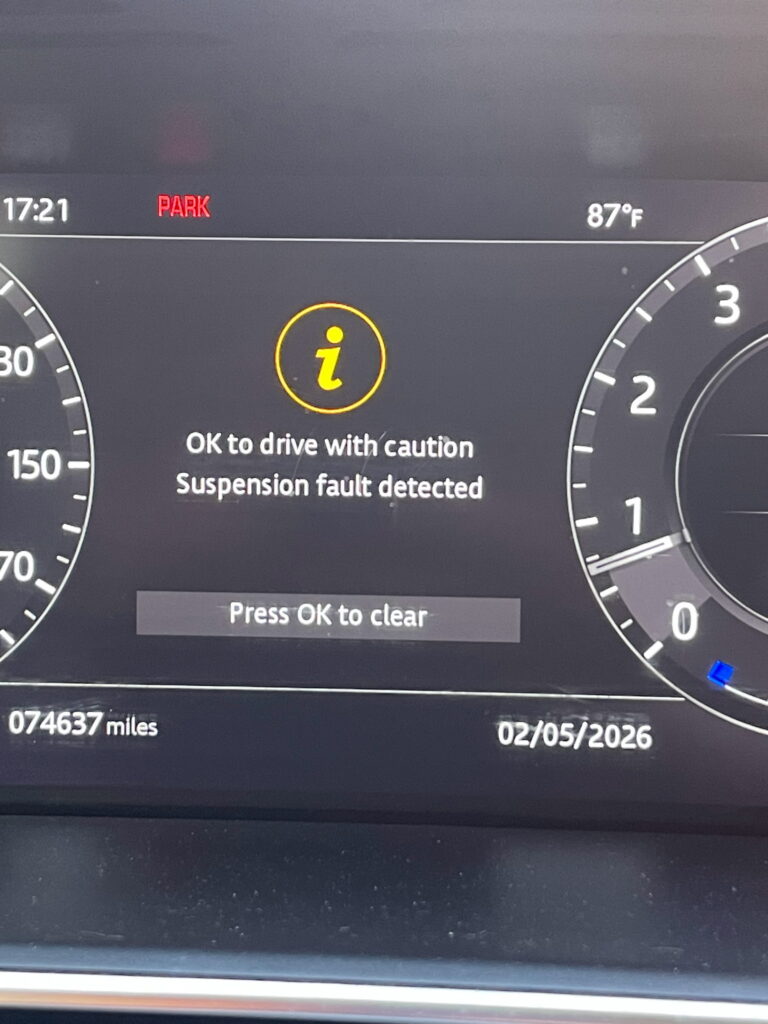
If your vehicle feels unstable over bumps, starts bouncing excessively on the freeway, or suddenly looks like it’s leaning or sitting low, you may be dealing with a failing air suspension system.
Air suspension systems are designed to improve ride comfort and maintain proper ride height by using air-filled suspension components instead of traditional springs. If you want to learn more about how air suspension systems work, this overview of air ride suspension technology provides additional information.
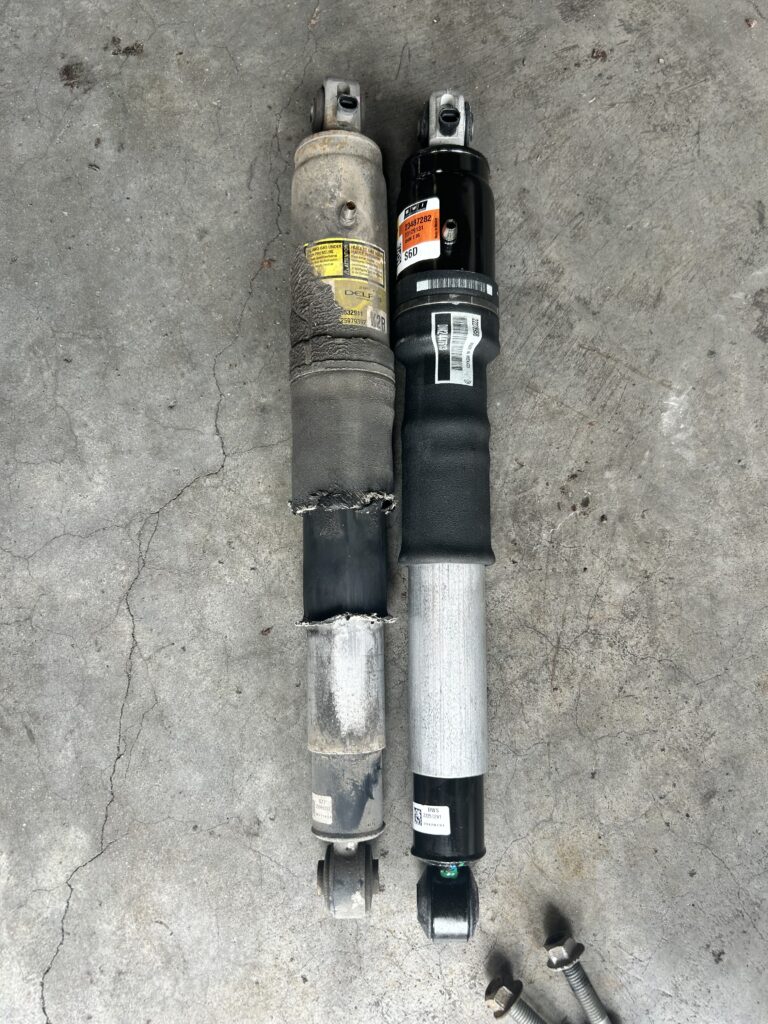
Recently, we had a Chevrolet Tahoe come into the shop after the customer noticed the rear of the vehicle felt unstable and unpredictable when hitting bumps on the freeway. During our inspection, we found the air suspension system had failed, causing the rear suspension to no longer properly support or control the vehicle.
At Chimney Rock Car Care, we regularly diagnose suspension problems on vehicles throughout Houston, including Chevrolet Tahoe, GMC Yukon, Cadillac Escalade, Jeep, Land Rover, Mercedes-Benz, BMW, and more.
With Houston heat, rough roads, potholes, and stop-and-go traffic, air suspension systems work hard every day — and eventually components begin to fail.
Common Signs of Air Suspension Problems
Many drivers notice suspension problems gradually before the system completely fails.
Common symptoms include:
• Vehicle leaning or sagging when parked
• One corner sitting lower than the others
• Suspension warning lights on the dashboard
• Loud compressor noise
• Rough or bouncy ride
• Vehicle raising or lowering unevenly
• Excessive bouncing after bumps
• Poor handling or instability while driving
In some cases, the vehicle may temporarily raise back up after starting, only to sag again later.
What Causes Air Suspension Failure?
Modern air ride suspension systems use several components working together to maintain ride height and comfort.
Common failures include:
• Cracked or leaking air bags
• Weak or failed air compressors
• Air line leaks
• Faulty ride height sensors
• Electrical faults within the suspension control system
Houston heat can dry out rubber air bags over time, while potholes and rough roads place additional stress on suspension components.
Once one part begins failing, the rest of the system often has to work harder to compensate.
Why You Shouldn’t Ignore a Sagging Suspension
A failing air suspension system is more than just a comfort issue.
Driving with a sagging suspension can lead to:
• Premature tire wear
• Reduced braking stability
• Poor steering control
• Additional damage to the compressor
• Uneven vehicle loading
• Increased strain on other suspension components
In severe cases, the vehicle may become unsafe to drive.
Replacing an air compressor without repairing the original leak can also cause the new compressor to fail prematurely because it is forced to run continuously trying to maintain ride height.
How We Diagnose Air Suspension Problems
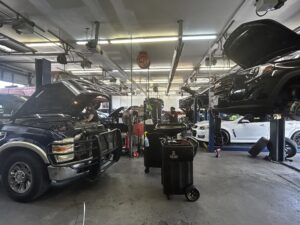
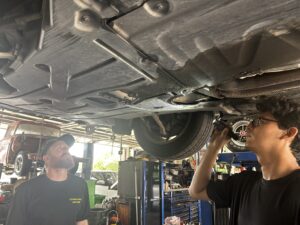
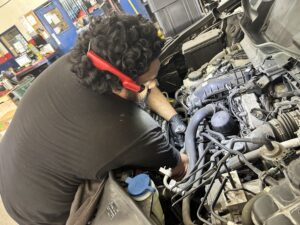
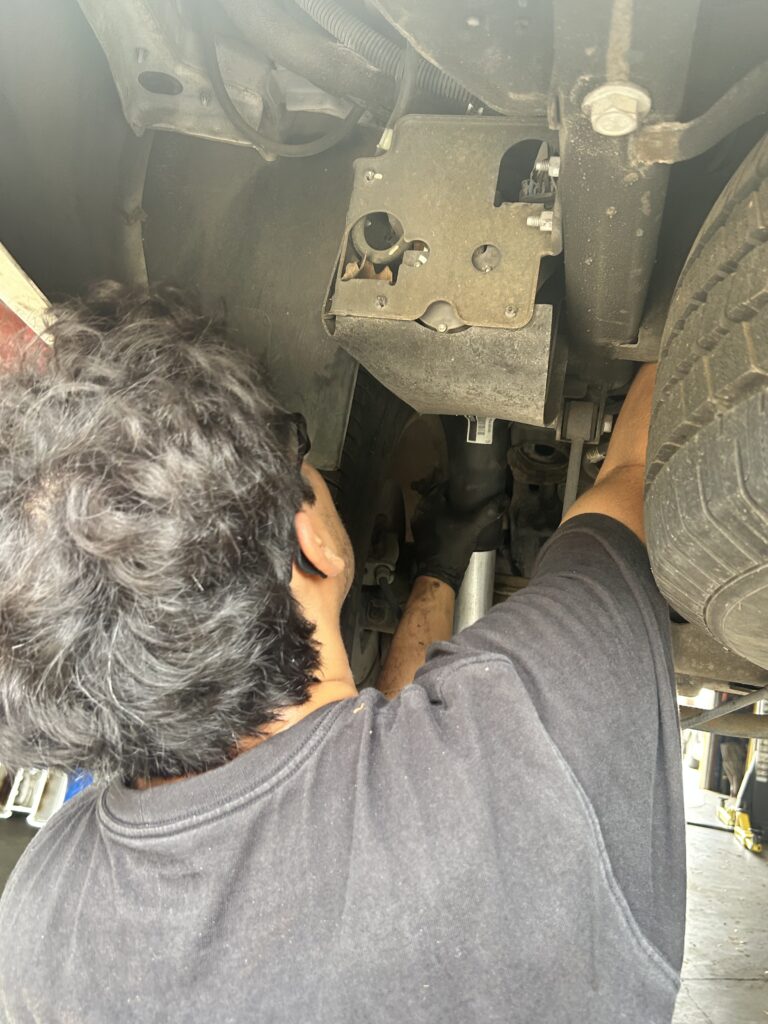
At Chimney Rock Car Care, our ASE-certified technicians perform a complete suspension inspection and diagnostic process to identify the root cause of the problem.
This may include:
• Visual inspection for leaking air bags
• Ride height measurements
• Compressor operation testing
• Air leak testing
• Scan tool diagnostics for suspension fault codes
• Inspection of suspension and steering components
Our Digital Vehicle Inspections include photos and videos so you can clearly see what we find and understand our recommendations.
Air Suspension Repair Near the Houston Galleria
If your Tahoe, Escalade, Range Rover, Jeep, Mercedes-Benz, BMW, or other SUV is sitting low, bouncing excessively, or riding rough, our team can help diagnose the issue properly.
Chimney Rock Car Care proudly provides suspension repair and air suspension diagnostics for drivers in River Oaks, Memorial, Meyerland, Bellaire, West University, Spring Branch, Katy, and the Houston Galleria area.
Call today to schedule an appointment before a minor suspension problem turns into a much more expensive repair.